Piano student motivation is one of the hardest things to sustain week after week. You show up, prepared and energized—only to hear the familiar, “I didn’t have time to practice.” Cue the sigh. The inner monologue. The trying-not-to-sound-frustrated moment.
But here’s the thing: most of the time, it’s not about laziness.
It’s about mindset. Overwhelm. Disconnection. Lack of structure. Or just being 11.
So if you’ve been questioning your teaching or wondering what else you can possibly do to get your students to show up for themselves—this post is for you.
Let’s break down why students stop practicing—and more importantly, what actually works to help them start again.
Why Students Don’t Practice (And Why It’s Not Your Fault)
You could be the best teacher in the world and still have students who flake out on practice. It doesn’t mean you’re doing something wrong.
Here are a few of the real culprits behind motivation drops:
- Burnout + Boredom: When lessons feel too routine, students disengage—even if they like you.
- Lack of Clear Goals: If they don’t know what success looks like between lessons, they won’t chase it.
- Home Distractions: Siblings, sports, school stress—real life gets loud.
- Unrealistic Expectations: Some students think they should “just get it,” and when they don’t, they shut down.
- Shame or Fear of Failure: If they’re not practicing because they don’t want to disappoint you, we’ve got a bigger opportunity here: to make them feel safe even when they’re struggling.
So no, it’s not just a discipline problem. It’s a systems + mindset opportunity.
5 Motivation Hacks That Actually Work for Piano Students
Let’s talk strategy. These are the tools I’ve used in my own studio—and ones I know other teachers swear by.
1. Gamify the Practice
Turn practice into a challenge, not a chore.
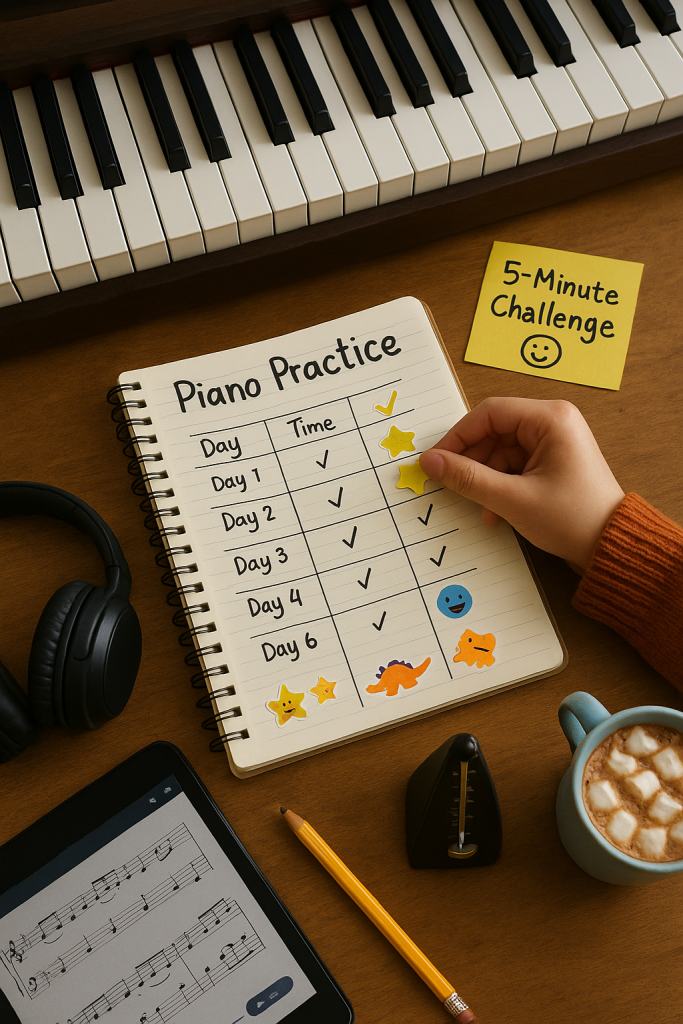
Use apps like Tonara, or even simple sticker charts or point systems. Create “beat the teacher” challenges. Reward consistency more than perfection.
🎯 Goal: Make them feel like they’re winning at music, not just surviving it.
2. Micro Goals, Micro Wins
“Practice this whole piece” is overwhelming. “Nail these two measures by Friday” feels doable.
Break practice assignments into tiny victories. Small, repeatable success builds confidence—and confidence builds consistency.
3. Practice Prompts
Instead of saying “go practice,” try this:
🗣 “I want you to teach your sibling this rhythm game.”
🗣 “Make up your own lyrics for the piece and sing it.”
Practice becomes more than repetition—it becomes interaction. Let them turn learning into expression.
4. The 5-Minute Rule
Tell your student: just sit down and play for five minutes. That’s it.
More often than not, five minutes turns into twenty. But the win is showing up. You’re removing the mental resistance of “I have to do a full practice session.”
It’s permission to begin.
5. Give Them Agency
Let them:
- Pick a piece they love (even if it’s “We Don’t Talk About Bruno” for the 400th time)
- Set a goal for themselves
- Track their own progress in a fun way
Motivation goes way up when students feel like co-creators in their journey—not just rule-followers.
AI Tools That Help You Personalize and Motivate
Want to know what’s been a game-changer in my studio lately? ChatGPT.
I use it to:
- Generate fun weekly practice challenges
- Write silly warm-ups based on my students’ favorite artists
- Create mini games they can do at home with their siblings
🎁 Need help doing that? I made a free resource to get you started:
👉 Grab your AI prompts here.
Here’s an example prompt you can use:
“Write a fun weekly challenge for an 11-year-old beginner piano student who likes Taylor Swift.”
What comes back? Something like:
“Your challenge this week is to play your scale warm-up in the rhythm of ‘Shake It Off’. Bonus points if you sing while you play!”
It’s fast. It’s personal. It feels like magic.
Studio Culture Matters More Than You Think
You want students to be consistent? Start by making them feel safe.
- Celebrate wins—even if they’re small
- Use bell rings, stickers, or silly rituals
- Give high-fives, funny practice awards, or post-it note shoutouts
When students feel seen, they’re more likely to show up—for you, and for themselves.
Because this isn’t just about piano. It’s about belonging.
What to Say (When You Want to Scream)
We’ve all had the moment: the practice log is empty (again), and you’re trying so hard not to let your frustration show.
Here’s the reframe:
“You didn’t fail this week. You just didn’t find your groove yet. Let’s try something different.”
When you shift the conversation from disappointment to curiosity, you change the tone—and the trajectory.
Motivation doesn’t respond well to shame. But it does respond to strategy, support, and storytelling.
Motivation Isn’t Magic—It’s a System
Here’s what I’ve learned: piano student motivation isn’t something you wait for. It’s something you design for.
Through:
- Clear, realistic goals
- Creative and fun assignments
- A sense of ownership
- Emotional connection and encouragement
- A studio culture that celebrates showing up, not just being perfect
When students aren’t practicing, they’re not broken—they’re just blocked.
And you, teacher friend, are the one who can build the bridge.
🎧 Want More Like This?
🎁 Grab free AI prompts to spark creative assignments and rewards
🎧 And subscribe to the TopMusicAI Podcast—where I share real-world studio strategies and explore how AI can help you teach with heart and efficiency.