
This post explores the science behind music lesson emotional regulation—how each lesson impacts the brain’s chemical balance, shifting students from stressed to settled. The emotional transformations you witness every week? They’re not just anecdotal—they’re neurochemical.
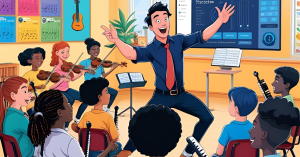
You ever have a student walk into your studio in a full-on mood? Like, arms crossed, hoodie up, already defeated before you’ve even said “hi”? And then—thirty minutes later—they walk out smiling. Confident. Lighter. Almost like… a completely different kid?
Let’s dive into the real neuroscience behind why your lessons feel like emotional reset buttons.
The Science of Music Lesson Emotional Regulation
When we talk about music lessons as emotional regulators, we’re talking about brain chemistry—dopamine, serotonin, and oxytocin.
🔬 Dopamine: The Motivation Spark
Dopamine is the brain’s reward chemical. It’s released when something feels good—like mastering a tricky rhythm, improvising something fun, or hearing specific praise.
Why it matters:
- Boosts motivation and attention
- Reinforces effort and learning
- Helps with long-term memory formation
Every “nice work!” you give helps wire that lesson into your student’s brain. That’s music lesson emotional regulation in action.
🌿 Serotonin: The Mood Stabilizer
If dopamine is the boost, serotonin is the baseline. It’s released when students feel safe, respected, and emotionally grounded in your space.
It:
- Regulates mood swings
- Lowers anxiety and increases patience
- Creates a sense of security
Praise, presence, and a consistent routine help foster that serotonin-rich stability students need to thrive.
“Dopamine is the accelerator. Serotonin is the steering wheel.”
When both are present, your studio becomes the safest, most productive place in a student’s week.
🔊 Want the full breakdown of dopamine, serotonin, and how your studio environment affects brain chemistry?
🎧 Listen to the full TopMusicAI episode here
Music Lessons Are a Neurochemical Powerhouse
Studies show that listening to and making music activates:
- The nucleus accumbens (dopamine)
- The hippocampus (memory and learning)
- The amygdala (emotion regulation)
🎶 Why This Matters for Music Lesson Emotional Regulation
- Dopamine spikes when students master new skills
- Serotonin rises with emotional support and comfort
- Oxytocin (the bonding chemical) increases during group music-making
“When a student experiences rhythm, praise, and connection in one lesson—they’re literally being rewired to feel safe, successful, and seen.”
The Studio Environment Is the Hidden Regulator
🛋️ Emotional Architecture
Your teaching space isn’t neutral—it’s active. Warm lighting, familiar routines, and supportive body language help send “you’re safe here” signals to the brain.
Research from Dr. Louis Cozolino shows:
- Safe environments boost neuroplasticity
- Chaotic or judgmental spaces raise cortisol and block learning
When your students feel welcome the moment they walk in, their brain relaxes—and opens up.
🔁 Rituals That Anchor Regulation
Simple things like:
- A familiar warm-up
- A consistent greeting
- An end-of-lesson high five
…all signal predictability and belonging—core drivers of music lesson emotional regulation.
Communication as a Chemical Cue
🧠 Your Words = Chemical Triggers
The way you talk to students changes their brain chemistry in real time:
- “I love how focused you were just now” → dopamine
- Eye contact + calm tone → serotonin
- Laughing together in a jam session → oxytocin
Even subtle things like posture, voice inflection, and name usage create emotional safety.
💬 5 Quick Communication Cues to Gift Dopamine + Serotonin
- Say their name often
- Give effort-based praise (“You didn’t give up on that tricky part!”)
- Use slow, intentional tone when giving feedback
- Nod or mirror their posture when they talk
- Let them finish speaking before responding
These micro-actions compound over time—retraining the brain to associate effort with reward.
Long-Term Impact: Music Lessons That Reshape Emotional Resilience
📈 What the Science Says
- Children with consistent music education and validation show lower anxiety and greater emotional regulation
- Positive reinforcement builds emotional literacy and resilience into adulthood
“Music lesson emotional regulation is more than a side effect—it’s a developmental asset.”
Even students who move on from music carry these internal shifts:
- “I’m capable of hard things.”
- “I’m safe being myself.”
- “Effort pays off.”
Let’s Recap: Why Music Lesson Emotional Regulation Matters
You’re not just correcting posture or assigning pieces—you’re actively helping kids:
- Self-regulate emotions
- Build confidence through chemical feedback
- Anchor safety, connection, and motivation in their nervous system
That’s not fluff. That’s neuroscience. That’s what makes you irreplaceable.
Want to Go Deeper?
🎧 Listen to the full episode on the TopMusicAI podcast
🎯 More Teaching Tips and Strategies
Let’s keep building regulated, resilient humans—one dopamine hit at a time.